
Project case study
Wedlock 2
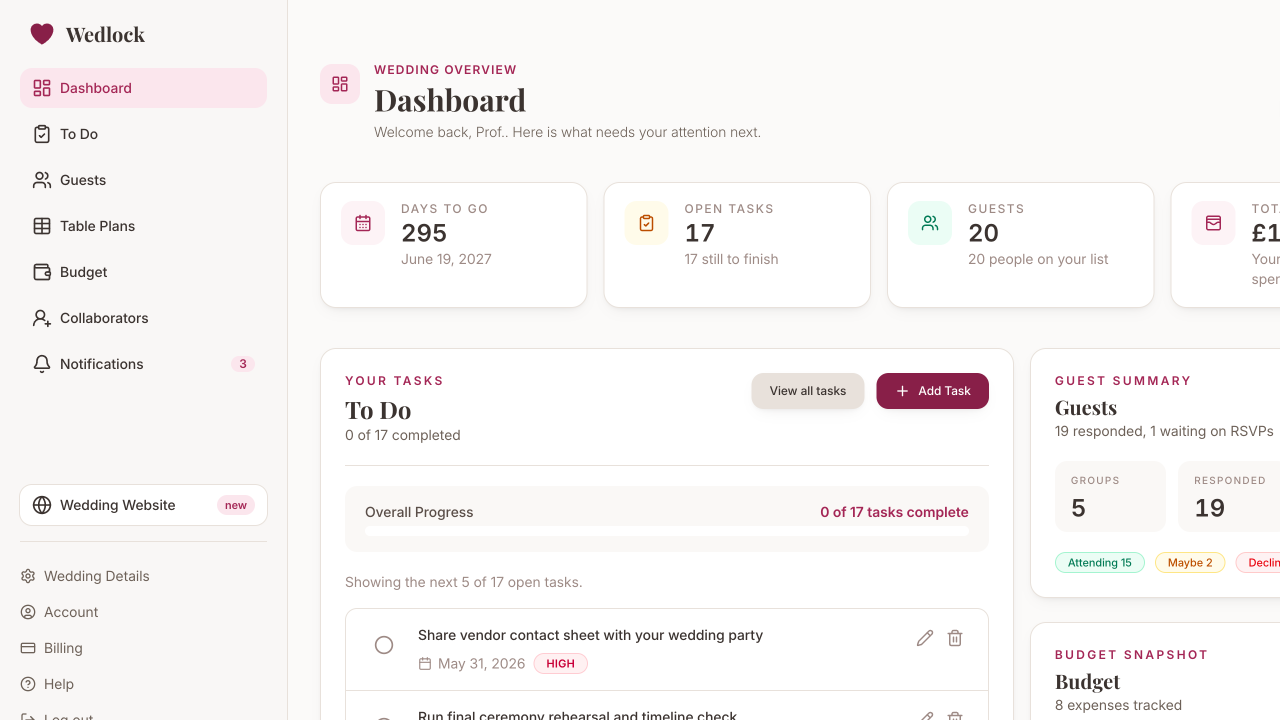
One place for tasks, guests, table plans and budgeting, so you and your partner stay aligned without the chaos.
- AI development
- Laravel
- Filament
- Inertia.js
- Vue.js
- Tailwind CSS
The Problem
Wedding Plans Fall Out of Sync
Couples juggle checklists, RSVPs, budgets, dietary needs, guest groupings and countless small tasks—often scattered across spreadsheets, WhatsApp groups and sticky notes. The opportunity was to bring those essentials into one focused workspace with a clear, usable interface.
The Solution
A Calm Workspace for the Whole Plan
Wedlock brings the practical parts of wedding planning into one shared workspace. Couples can move from an open task to a guest response, table assignment or payment without switching between spreadsheets and messages.
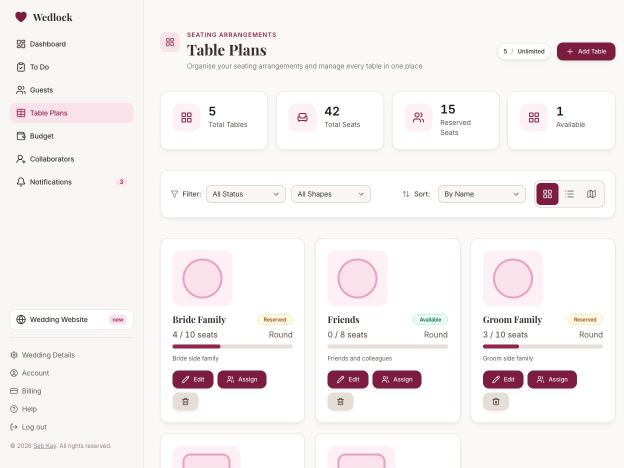
Table plans and seating maps
Create tables, manage capacity and assign guests as the plan changes.
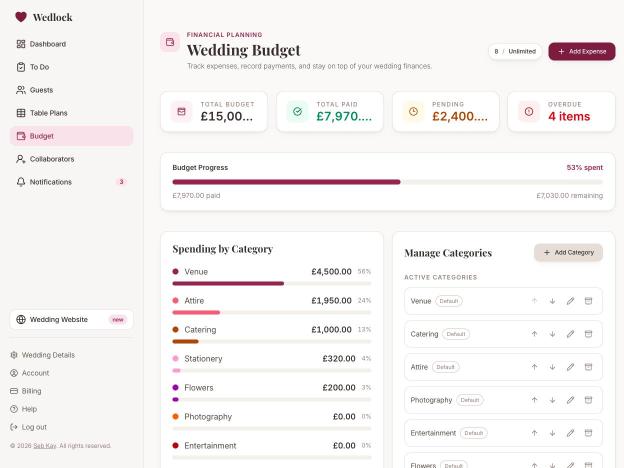
Budget and payment tracking
Keep target spend, paid amounts and outstanding payments visible together.
- Dashboard
- See tasks, guests, budget and upcoming deadlines together, so you know what needs attention next.
- Tasks
- Wedlock starts with a practical checklist, then lets you adapt it to your own plans.
- Milestones
- Tasks are organised around planning milestones, from 12 months before the wedding through to the final week.
- Guests
- Track who is attending, whether they are joining for the day or evening, and the details you need for planning.
- Guest Groups
- Group guests by family, friends, wedding party or any other group you need.
- Table Plans
- Create tables, assign guests and update the plan without rebuilding a spreadsheet.
- Interactive Seating Map
- Arrange tables on an interactive map, then assign guests to their seats.
- RSVPs
- Share a guest link and keep attendance responses and dietary details in one place.
- Guest Forms
- Guests can submit their attendance and dietary requirements through a dedicated form.
- Budget
- Plan expenses, see what has been paid and track what is still outstanding.
- Payments
- Record payments against each expense so the budget reflects what you have actually paid.
- Collaborators
- Invite a partner to share the plan and keep decisions in one workspace.
- Notifications
- Keep due tasks, guest responses and planning reminders visible when they need attention.
- Wedding Website
- Create a guest-facing wedding website that shares the details your guests need.
Responsive Design
The Planner Should Travel with the Plan
Wedding planning does not stay at a desk. V2 keeps the same core workflow usable on desktop, tablet and mobile, so couples can check tasks, guests and budget details wherever they are.
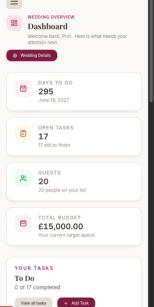
Mobile view
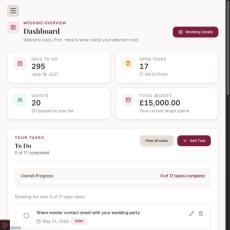
Tablet view
My Role
Sole Creator, AI Assisted
I created both versions of Wedlock myself. For V2, I used AI-assisted development to move faster while owning the product direction, design, implementation and deployment.
What this included
- Product vision & user journeys
- UI and UX design
- Frontend development
- Backend architecture
- Authentication & security
- Deployment & maintenance
Tech Stack
Performance, Maintainability and Modularity
Laravel keeps the product's domain logic, authentication and data access in one application. Inertia.js and Vue.js provide a fast, SPA-like interface, while Filament supports the admin experience and Tailwind CSS keeps the UI consistent across breakpoints.
Technologies Used
- Codex
- Claude Code
- Laravel
- Filament
- Vue.js
- Inertia.js
- Tailwind CSS
User Feedback & Learnings
What I Learned Building V2
Wedlock 2 is a new implementation shaped by the first version and early usage. I focused on a smaller, clearer set of planning tools and a calmer experience for couples.
Usability matters more than feature count
V2 focuses on the planning tasks couples need most instead of trying to cover every wedding-related job.
Small UX decisions have a big emotional impact
Inline editing, smart defaults and immediate feedback keep everyday planning work feeling manageable.
Real behaviour should guide iteration
The product should evolve from how couples actually plan, rather than from assumptions about what they might need.
Explore the product